Dnotitia at SC26: Matching AI Workloads to the Right Processors
At SC26 in Chicago, Dnotitia demonstrated its VDPU ASIC and explored how dedicated vector retrieval fits a system approach to AI infrastructure.
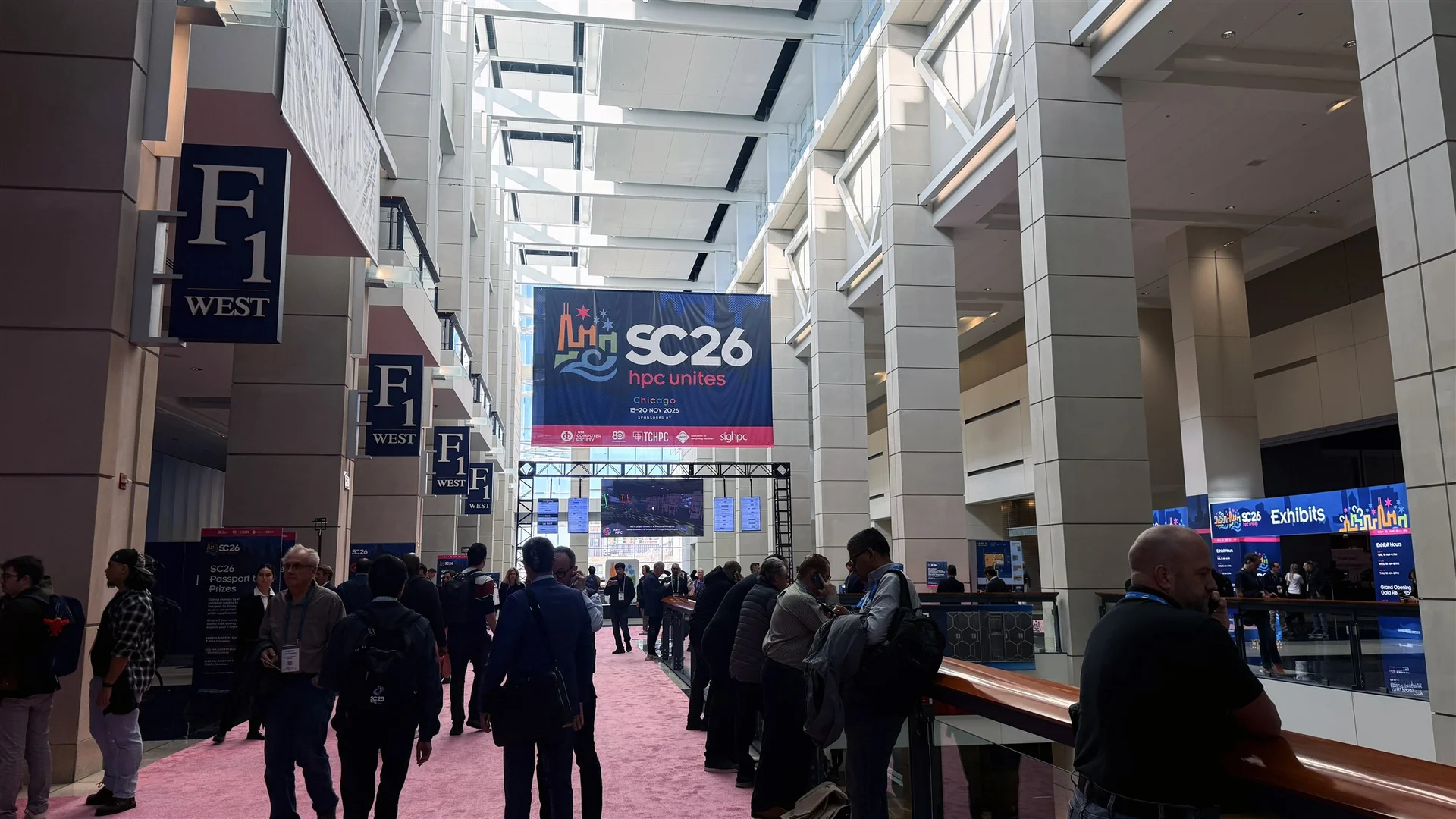
Attendees move through the SC26 venue at McCormick Place in Chicago.
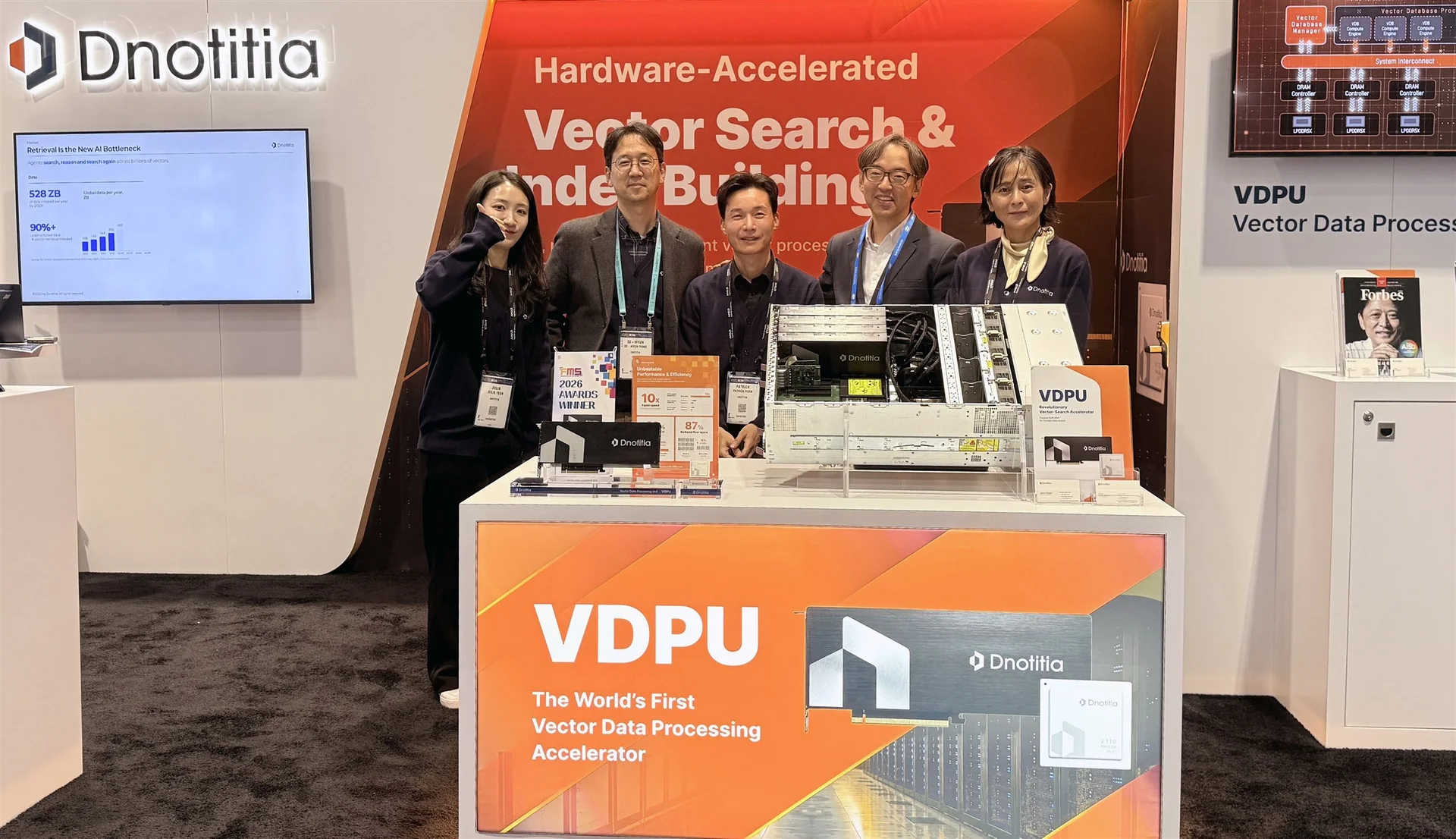
Dnotitia exhibited at SC26 from November 17–19, 2026, at McCormick Place in Chicago, presenting its first public live demonstration of the Vector Data Processing Unit (VDPU) built around an application-specific integrated circuit (ASIC). The exhibition at Booth 5613 placed dedicated vector retrieval hardware within the wider conversation about high-performance computing (HPC) and AI infrastructure.
SC26’s sessions on agent workloads, heterogeneous execution, storage and energy point to a systems approach to AI infrastructure: coordinating compute, memory and data movement. Dnotitia connects this approach to a practical design principle: assign retrieval work to hardware designed for its access patterns, while preserving resources for applications and AI models.
Key Takeaways
- SC26’s program addressed agentic AI, heterogeneous computing, data access and energy efficiency as connected infrastructure challenges.
- Dnotitia demonstrated natural-language search across approximately 2.6 million video frames using its VDPU ASIC.
- VDPU gives vector index building and search a dedicated hardware role within an AI system.
Four SC26 Themes for AI Infrastructure
1. Agentic AI brings memory and data access into focus
AI agents can consult information repeatedly as they carry out a task. That makes the handling of context, stored knowledge and intermediate results relevant to infrastructure planning. SC26’s AgenticAI4HPC program included work on agent memory hierarchies and input/output (I/O), highlighting the systems around model execution.
2. Heterogeneous computing requires coordinated execution
Heterogeneous computing combines different processor types for different tasks. SC26’s panel on heterogeneous disaggregation addressed the orchestration of AI workloads across accelerators, memory, compute and networking. For infrastructure teams, the question becomes where each stage of a workload should run and how those stages work together.
3. Storage and I/O are active parts of performance
The Next-Generation Scientific Storage and I/O session examined storage architectures and query offloading. This reinforces the need to consider how data reaches processing resources. For retrieval workloads, data access and comparison are part of the work that must be planned and measured.
4. Energy efficiency needs system-level measurement
SC26’s discussion of energy in the exascale era covered energy measurement, performance per watt and workload scheduling. These topics encourage evaluation of useful work across a system. They also provide a reason to examine how processing resources are allocated when planning AI infrastructure.
VDPU: A Dedicated Role for Vector Retrieval
Vector search finds related information by comparing numerical representations of data. It supports retrieval over content such as documents and images, including the information that AI applications consult during a task.
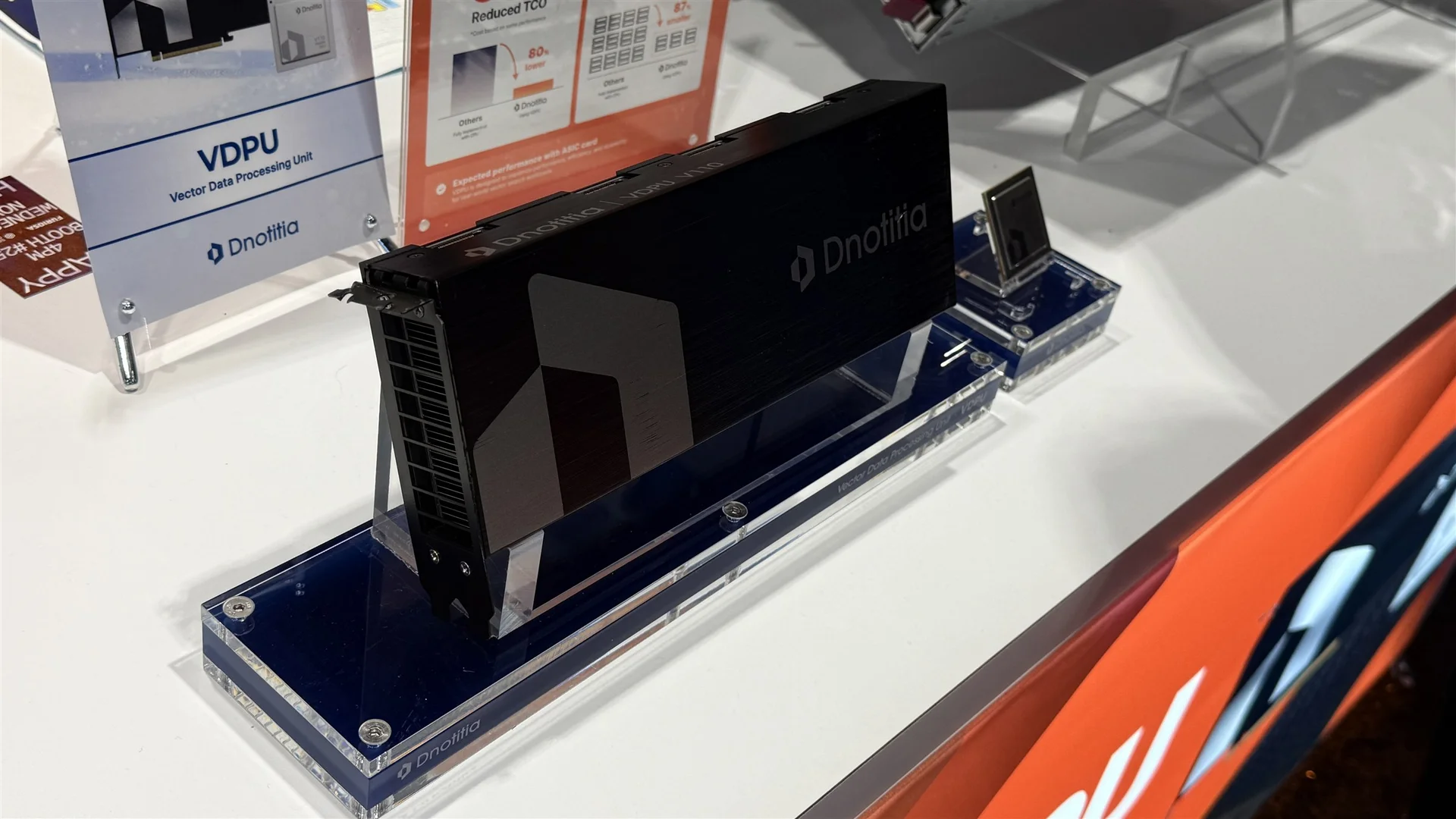
VDPU is Dnotitia’s dedicated accelerator for vector index building and search. Its architecture places the index in memory on the card and performs search there, returning results to the host. The intended division of work assigns vector retrieval to VDPU, application services to central processing units (CPUs), and model computation to graphics processing units (GPUs).
This approach connects the conference themes to a specific infrastructure task: giving retrieval its own processing resources within a heterogeneous system.
An ASIC-Based Live Demonstration at SC26
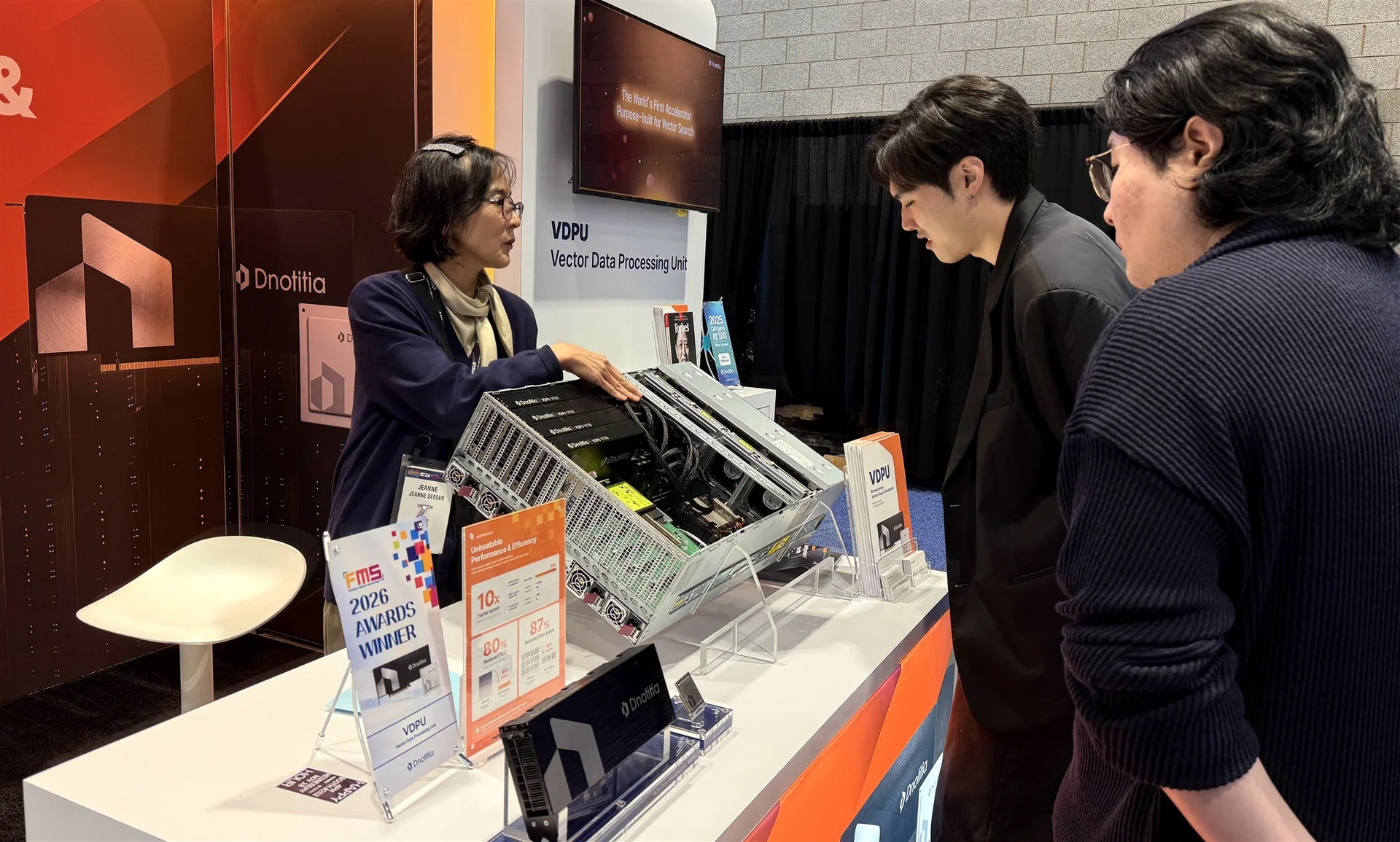
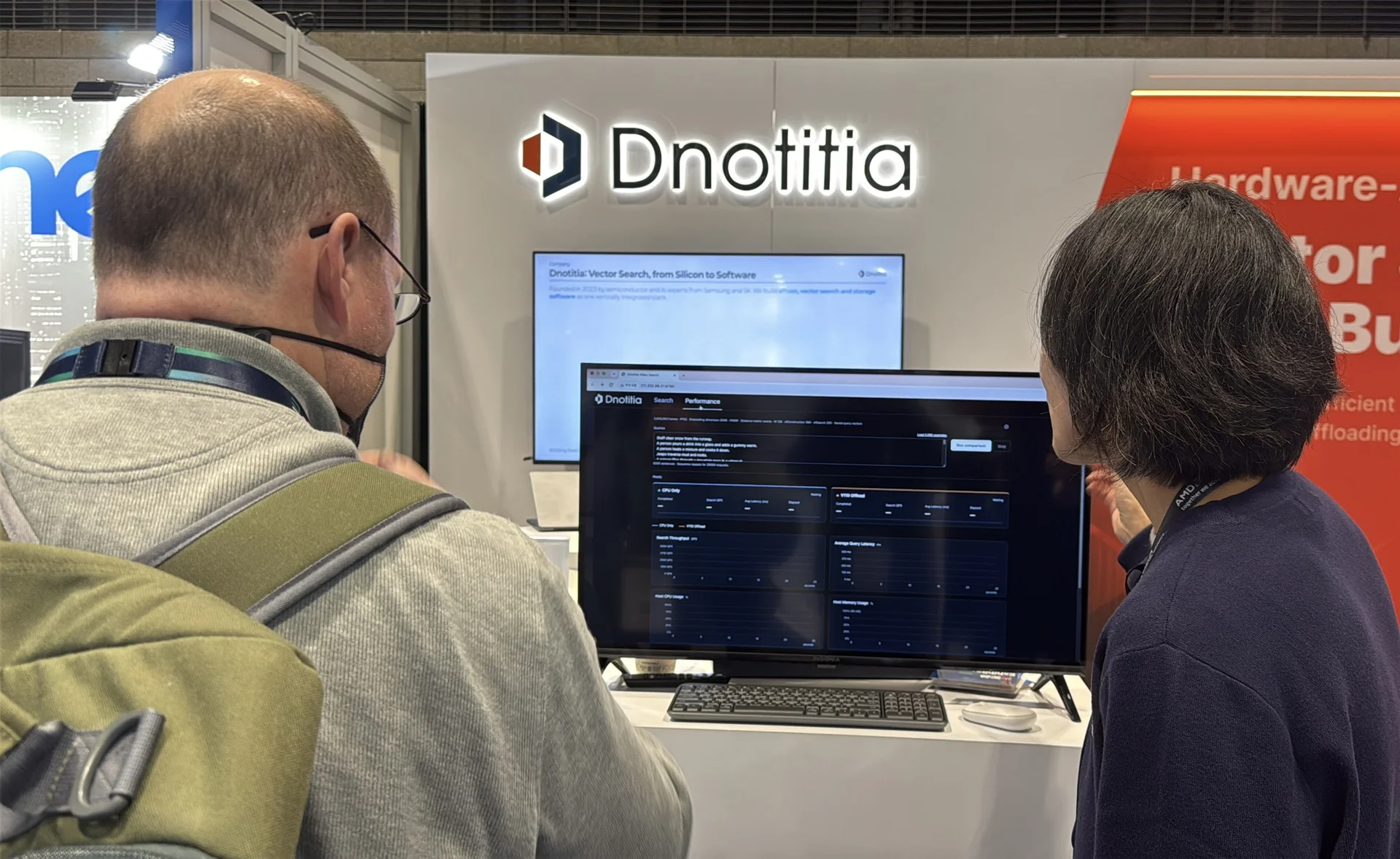
At SC26, Dnotitia demonstrated a VDPU card built around an application-specific integrated circuit (ASIC). Natural-language queries retrieved relevant results from approximately 2.6 million video frames by comparing their vector representations.
The company’s demonstration announcement describes the transition from earlier field-programmable gate array (FPGA) evaluation to public operation of the ASIC-based VDPU. Visitors could see the search interface alongside the company’s hardware exhibits and speak with Dnotitia representatives.
Turning the Demonstration into Workload Evaluation
For teams exploring dedicated retrieval hardware, the next step is to evaluate it against their own requirements. Relevant measures include throughput, response latency, retrieval quality and the resources needed by the surrounding application.
SC26 provided a setting to show Dnotitia’s approach and exchange perspectives with the HPC and AI community. That exchange can continue through workload-specific evaluation.
Explore how VDPU handles vector search, or discuss a proof of concept (PoC) with Dnotitia using your index, query workload and deployment requirements.