Dnotitia at VKAISS 2026: Rethinking Data Infrastructure for AI
At VKAISS 2026 in Hanoi, Dnotitia shared its perspective on AI data infrastructure through a keynote, VDPU hardware exhibits and industry exchanges.
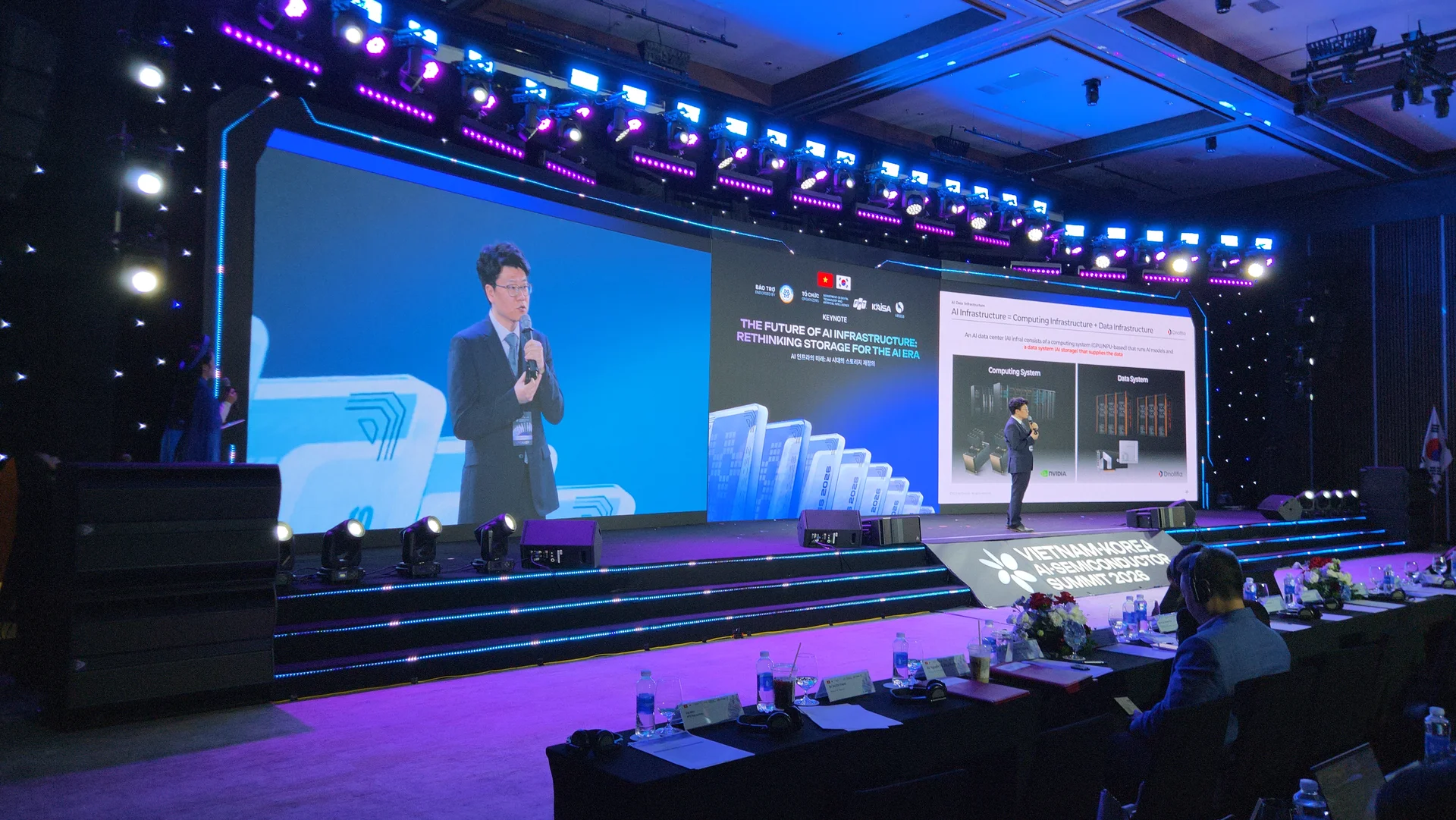
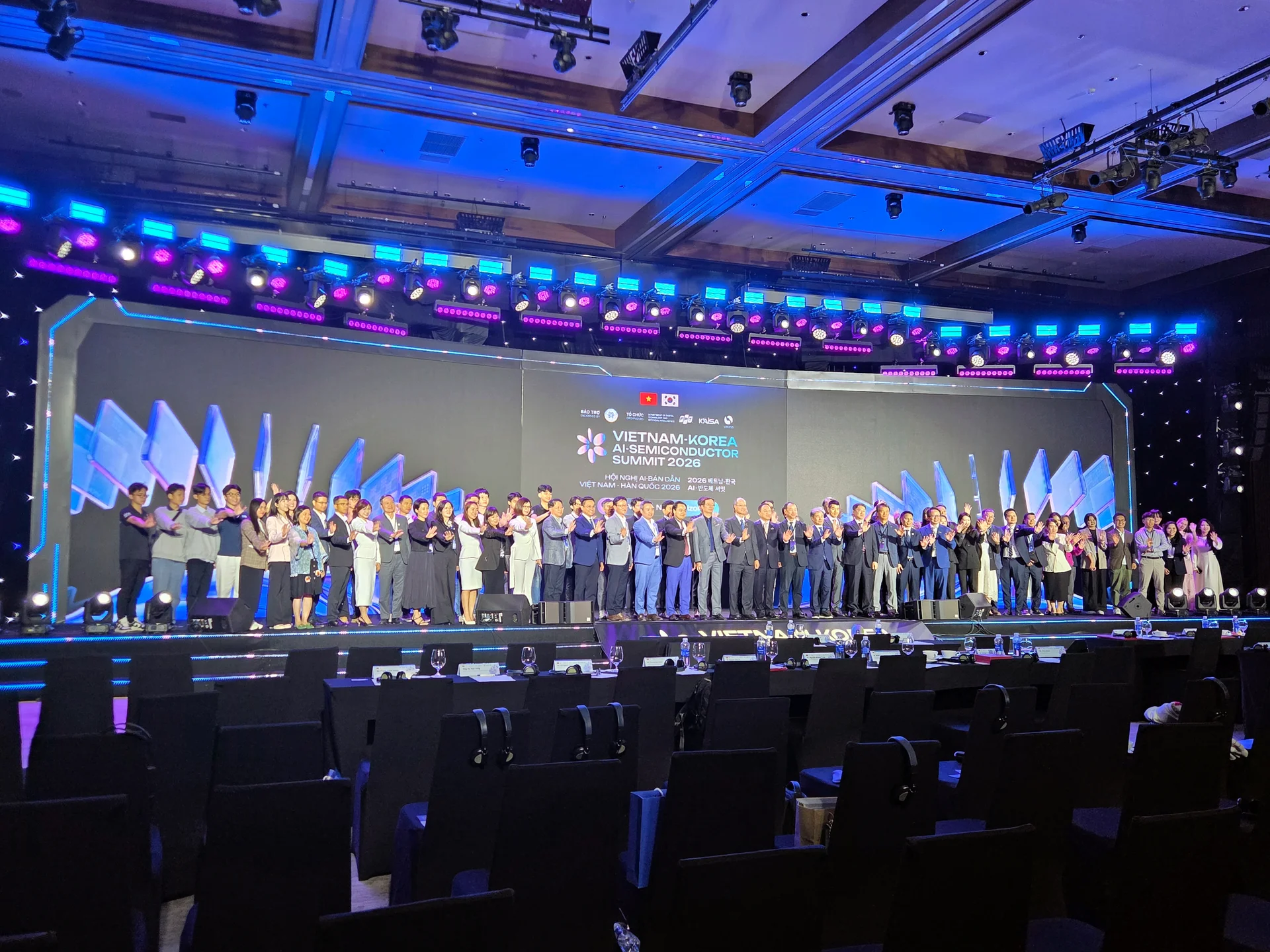
Dnotitia CAIO Seungjae Lee presents “The Future of AI Infrastructure: Rethinking Storage for the AI Era” at VKAISS 2026 in Hanoi on November 12.
Dnotitia participated in the Vietnam–Korea AI–Semiconductor Summit 2026 (VKAISS 2026) on November 12, 2026, at L7 West Lake Hanoi by Lotte in Hanoi, Vietnam. Chief AI Officer (CAIO) Seungjae Lee delivered a keynote on AI data infrastructure, while the company exhibited its Vector Data Processing Unit (VDPU) chip and PCIe accelerator card.
The keynote and exhibition connected a question facing AI infrastructure teams—how to make relevant data available to AI applications—with Dnotitia’s approach to dedicated vector search hardware.
Key Takeaways
- Dnotitia’s keynote explored the role of data retrieval and memory in AI infrastructure.
- VDPU chip and PCIe accelerator card exhibits introduced Dnotitia’s approach to vector search acceleration.
- Dnotitia also joined a government–industry meeting and visited the FPT campus in Hanoi on November 13.
VKAISS 2026: Connecting Vietnam and Korea’s AI and Semiconductor Ecosystems
VKAISS 2026 brought together participants from Vietnam and Korea to discuss technology, workforce development and semiconductor industry cooperation. Its program combined keynote presentations, policy discussions, business exchanges and a technology exhibition.
As described in FPT’s event recap, Dnotitia contributed a perspective on AI infrastructure and storage. This provided a setting to discuss how data systems support AI applications alongside advances in computing.
Rethinking Data Infrastructure for Retrieval and AI Agents
In his keynote, The Future of AI Infrastructure: Rethinking Storage for the AI Era, Lee examined the data requirements of AI applications that retrieve information as part of their work.
He introduced Retrieval-Augmented Generation (RAG), an approach that retrieves relevant external information and supplies it to a model to support response generation. He then discussed how AI agents can perform repeated searches as they work through a task, extending the role of retrieval beyond an initial question-and-answer exchange.
Lee also used external knowledge, long-term memory and short-term memory as a framework for explaining different data needs. External knowledge provides reference information; long-term memory can retain information from previous interactions; and short-term memory supports the context used during processing.
Within this framework, he discussed connecting dedicated hardware, the Seahorse vector database and storage. His central message was that AI infrastructure planning needs to consider how applications access and use data alongside the computing resources that run their models.
VDPU on Display: Dedicated Hardware for Vector Search
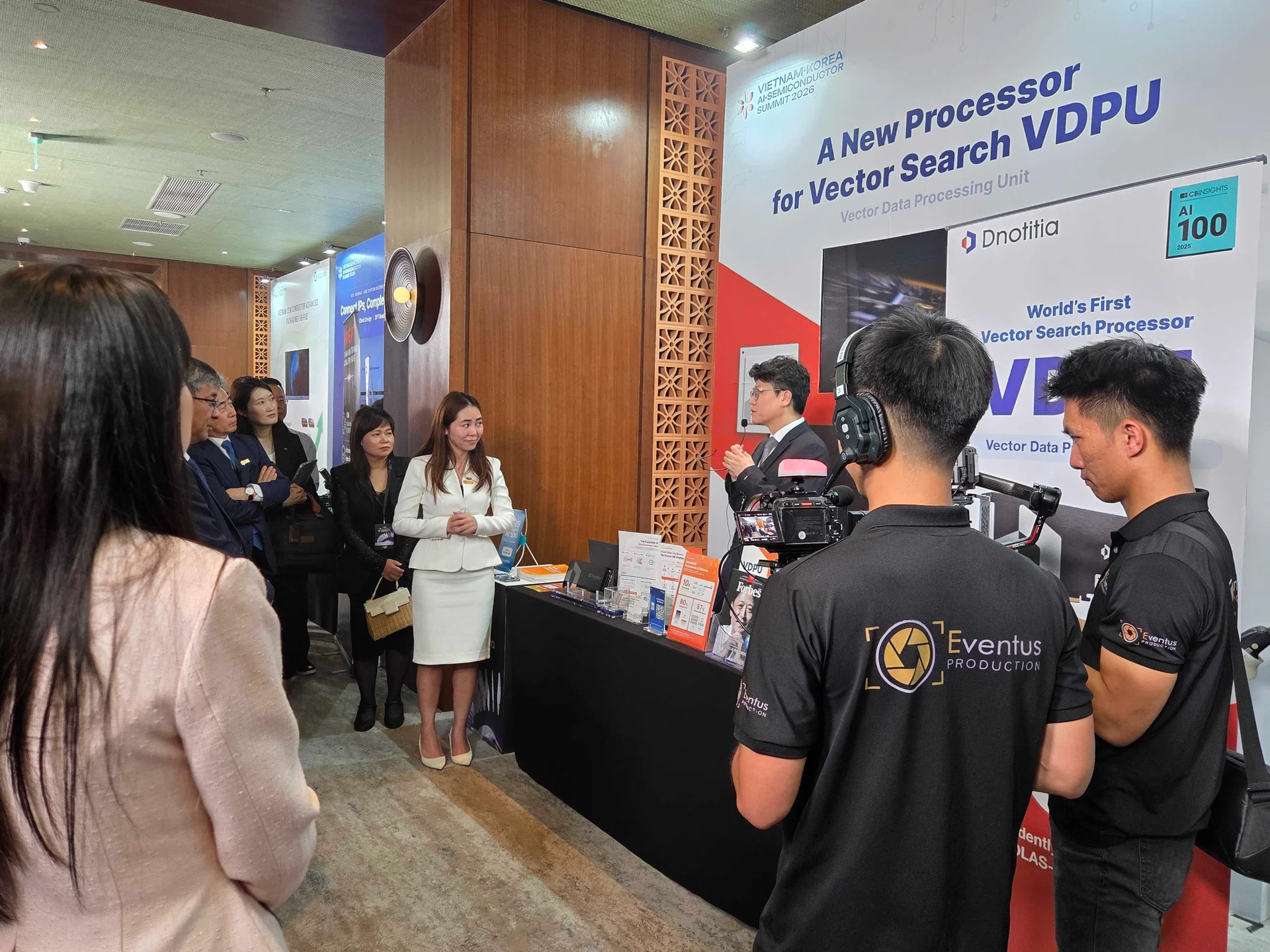
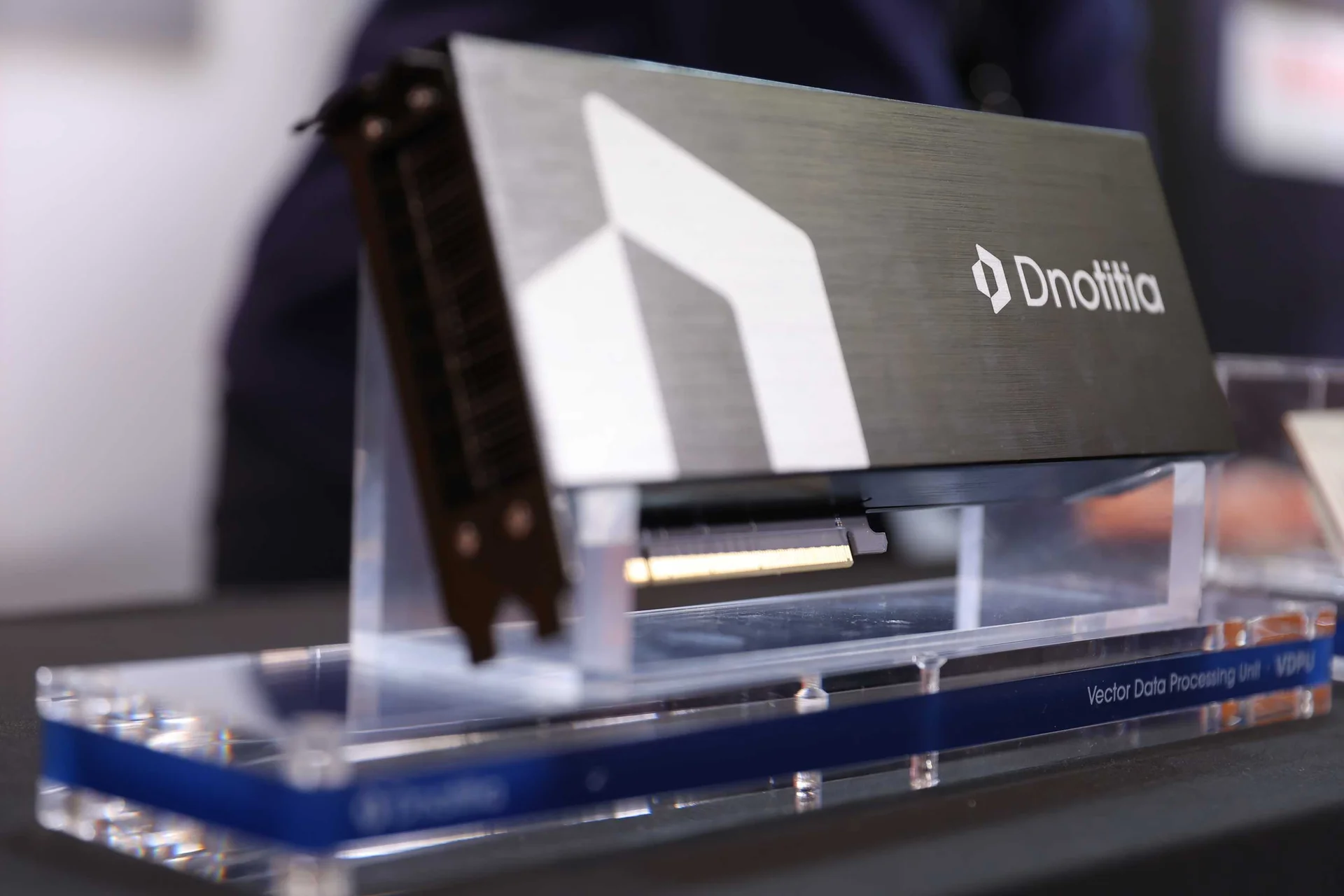
At the exhibition, Dnotitia displayed its VDPU chip and PCIe accelerator card, supported by product videos and English-language brochures. The exhibits introduced the hardware behind the company’s approach to vector search acceleration.
Vector search finds related information by comparing numerical representations of data, known as vectors. These representations can capture features of text, images and other content, enabling retrieval based on similarity.
VDPU provides dedicated hardware acceleration for vector processing tasks, including the data access and distance calculations used in vector search. Seahorse is the vector database within Dnotitia’s broader data infrastructure approach, giving the hardware and database distinct roles.
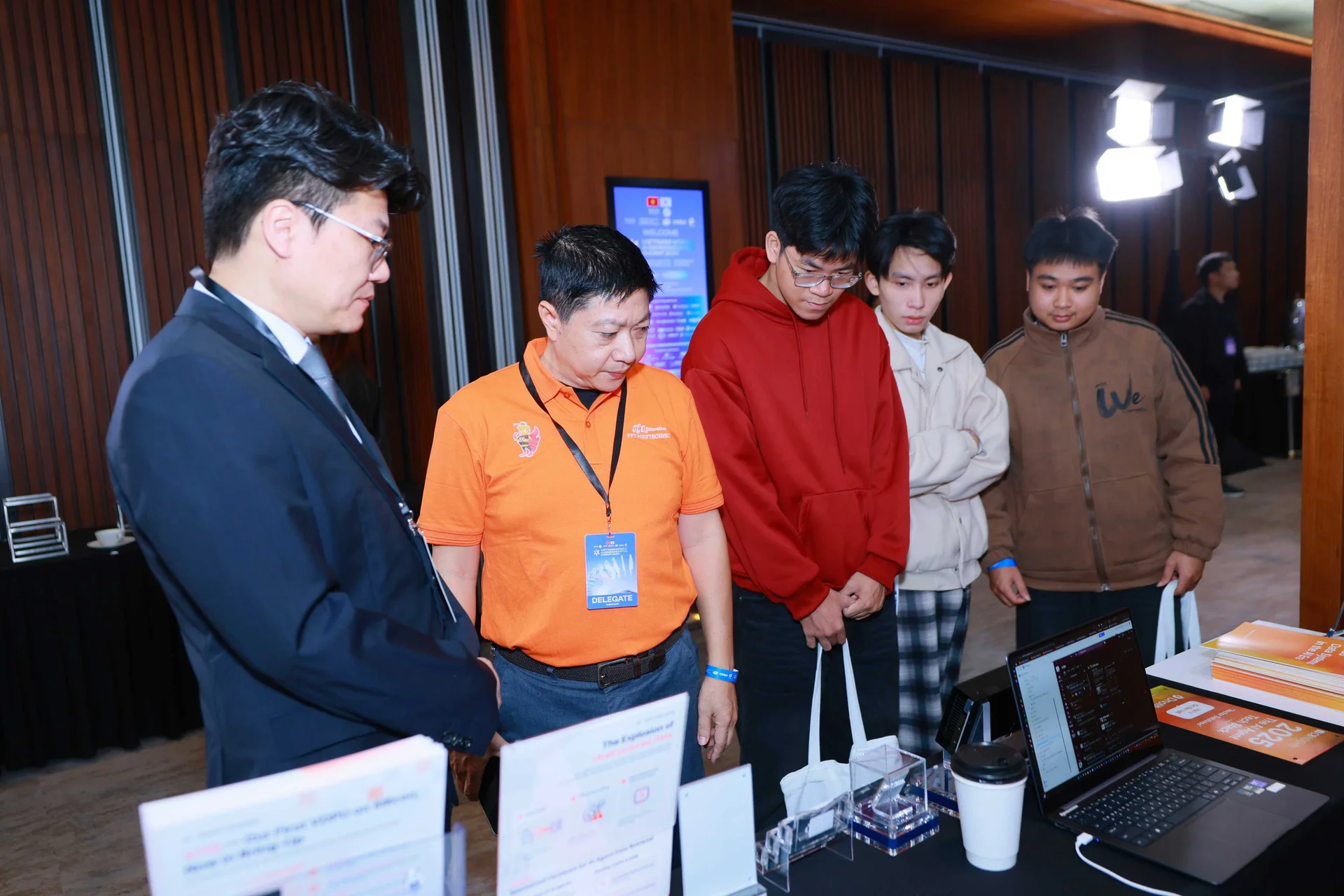
Conversations at the booth covered how vector search acceleration works and how it could affect total cost of ownership (TCO). These discussions connected the product exhibits with practical questions about the resources needed to support retrieval workloads.
Continuing the Exchange Through Industry Meetings and an FPT Campus Visit
Dnotitia’s participation continued on November 13 through a government–industry meeting attended by representatives of Vietnam’s Ministry of Science and Technology and FPT Semiconductor. Lee introduced Dnotitia during the meeting.
Discussions covered practical conditions for semiconductor cooperation, including workforce development, administrative procedures and access to design-support infrastructure. Participants also emphasized the importance of connecting Korean fabless companies with businesses in Vietnam that could adopt their technologies.
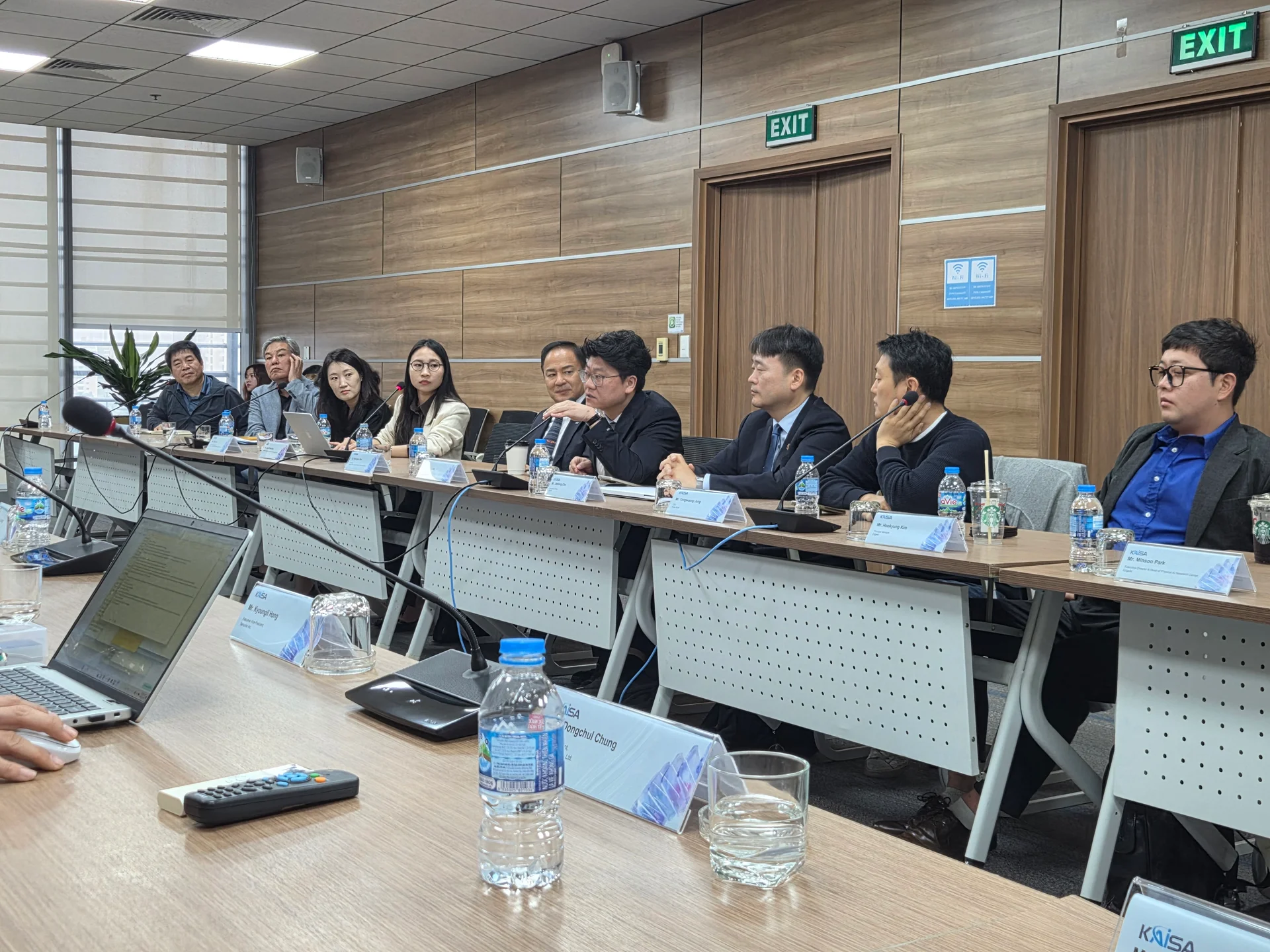
The team also visited the FPT campus and met local representatives. These activities extended the visit beyond the summit’s presentations and exhibition, providing opportunities for further exchange with Vietnam’s technology community.
Explore Seahorse’s vector database and RAG capabilities, or discuss your AI data infrastructure requirements with Dnotitia.