
What Should a Shared Store for AI Agent Work Records Provide?
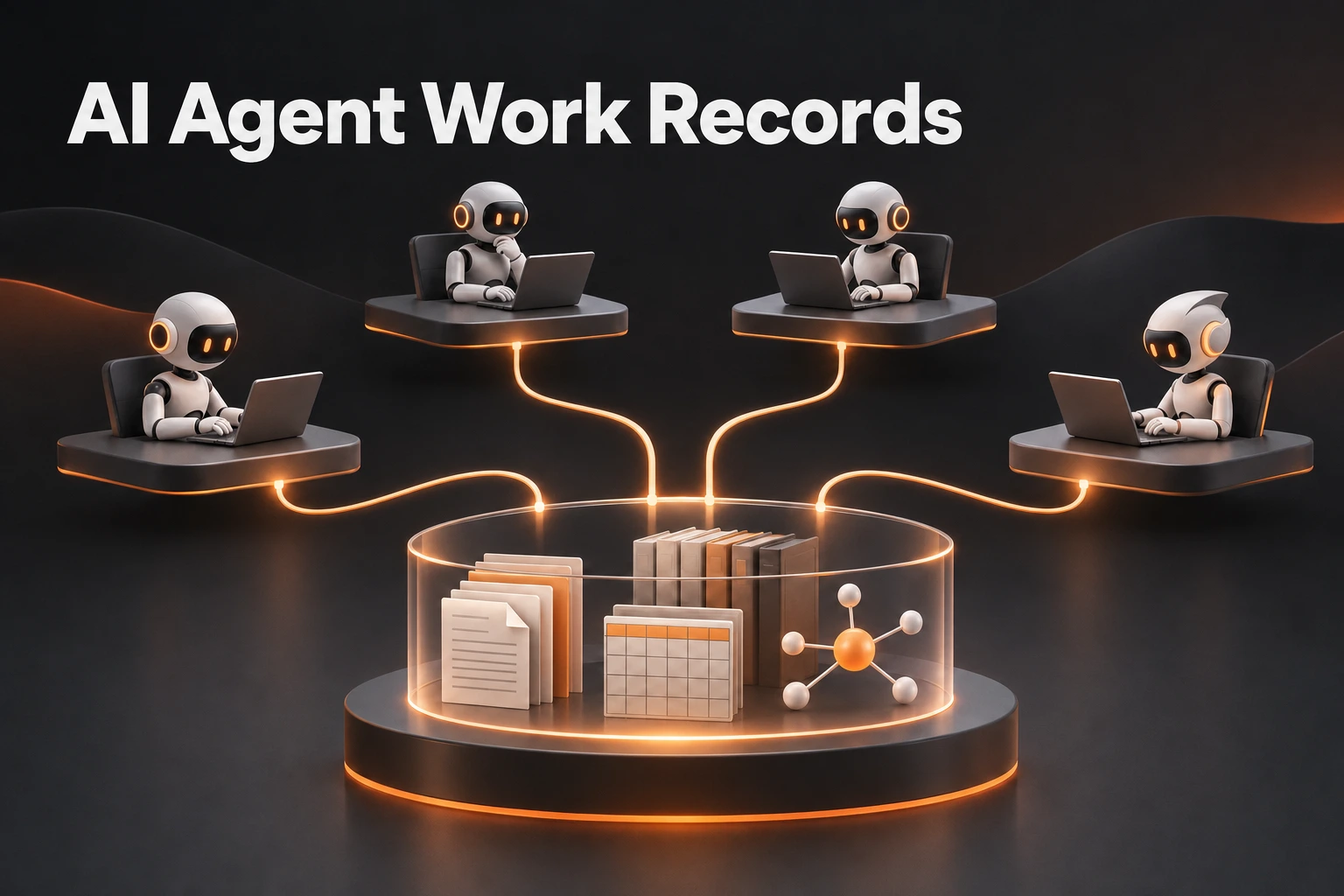
Dnotitia's AKB stores mixed records in a permissioned, versioned root, supports bounded retrieval, and separates Git history and change events from audit logs.
Key Takeaway
- Store heterogeneous context together: A shared store should hold documents, structured tables, files, logs, and session notes under one permissioned, versioned root.
- Give agents bounded retrieval: Combine hybrid semantic and keyword search with scoped literal pattern matching and heading-level inspection to locate stored records.
- Separate versioning from auditing: Rely on Git history and transactional change notifications to track knowledge updates rather than treating event streams as immutable audit trails.
When an engineering or operations team runs AI agents across daily tasks, critical work context disappears the moment a chat window closes or a developer leaves a project. AKB : Agent Knowledge Base provides organizational knowledge and memory to AI agents over Model Context Protocol (MCP). Instead of scattering work artifacts across isolated logs and local folders, teams need a clear standard for what context gets saved, how downstream agents find and reuse those records, and how operators track changes over time without mistaking storage logs for compliance systems.
What work records belong in a shared store?
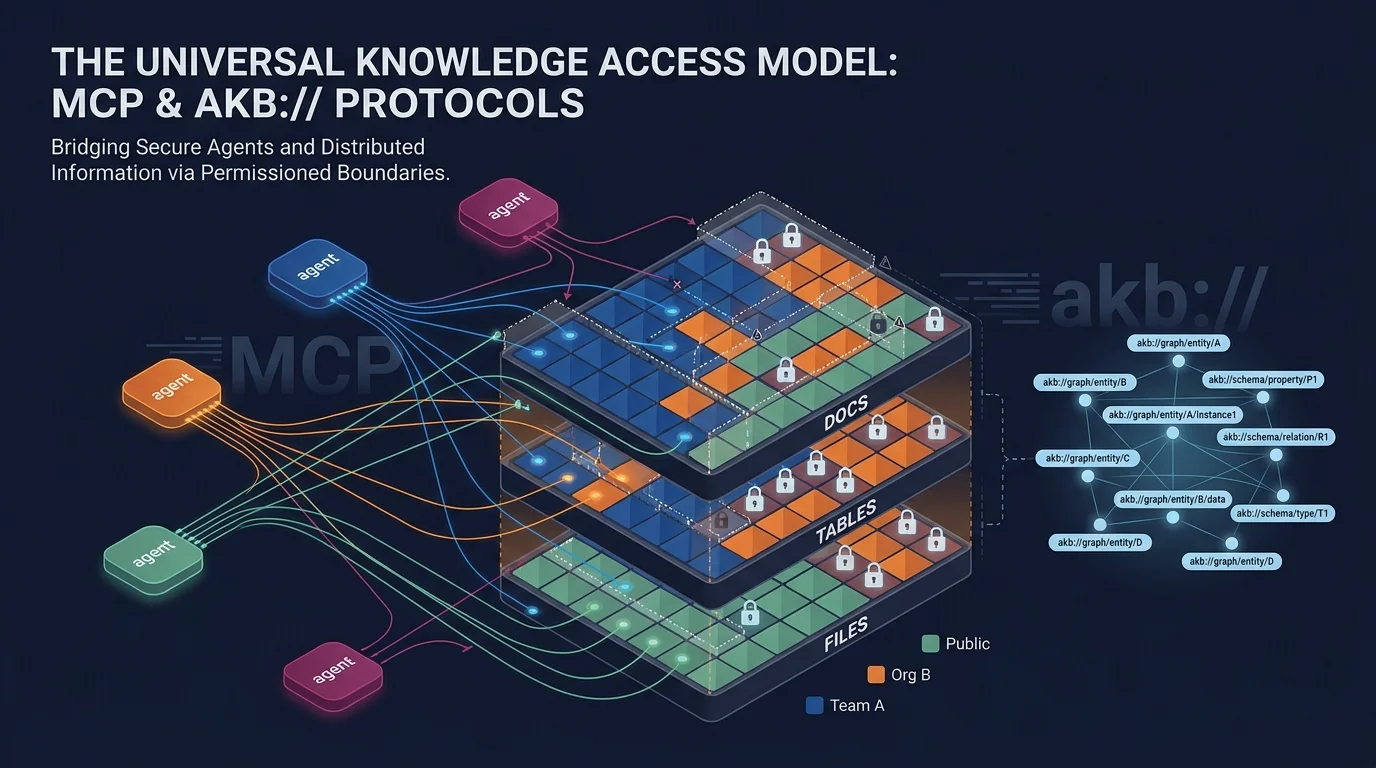
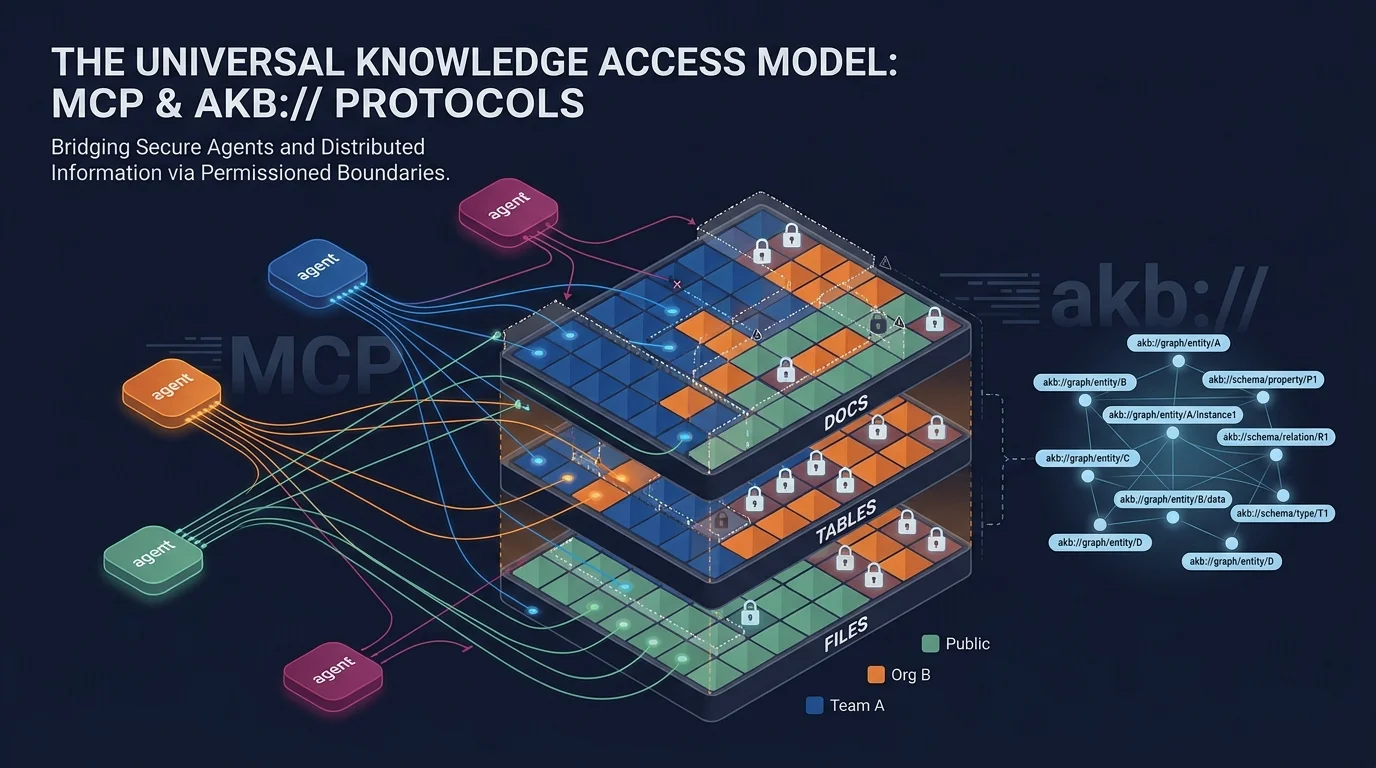
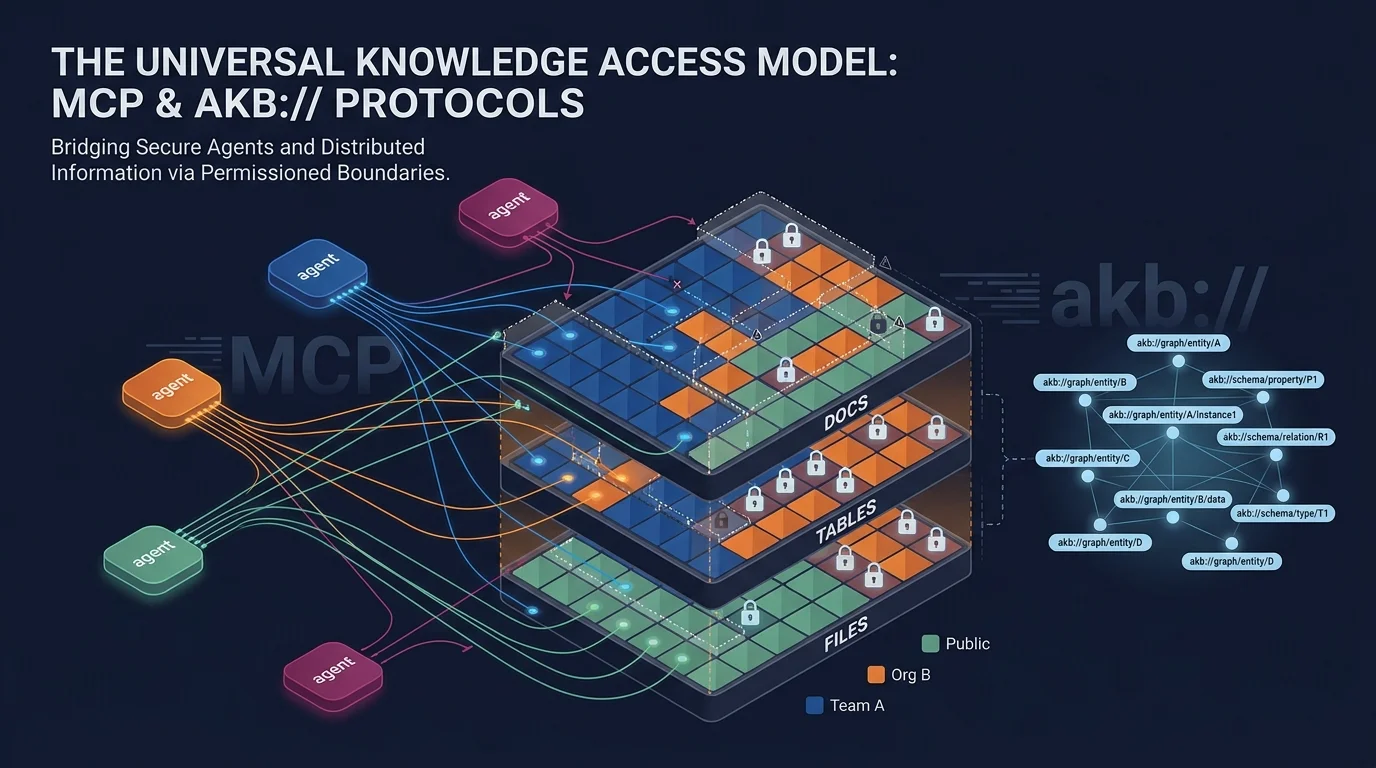
A shared store for agent work must accommodate both unstructured explanations and structured operational outputs in the same permissioned workspace. When an agent troubleshoots a deployment or refactors a module, the resulting record rarely fits into a single text file. AKB keeps documents, files, tables, logs, and conversations under one Git-versioned, permissioned root. Beyond managing standard Markdown documentation, it manages SQL databases and object storage.
When agents query or update structured data through akb_sql, PostgreSQL access control lists (ACLs) with user and vault roles are enforced, and the database rejects unauthorized vault references. This permission boundary matters when multiple teams or automated workflows share the same backing store but should only read or write records within their assigned vaults.
Capturing tacit debugging steps or architectural decisions during live development requires a way to turn transient agent interactions into durable notes. Agents read and write organizational knowledge through a shared tool set, and the akb-sessions plugin (available as of September 30, 2026, for affected coding environments) captures a coding session as structured notes. However, the core system is a read/write knowledge repository and does not include a built-in knowledge gardener inside the core store. Teams planning long-term knowledge maintenance must account for how stored notes are organized after initial capture rather than assuming the core storage layer includes a knowledge gardener.
How do agents retrieve and reuse stored records?
Storing past sessions and tables only helps if another agent can locate the exact record without flooding its context window. Agents read and write against the store with full version history using a unified tool set that includes akb_put, akb_search, akb_browse, and akb_relations. As of September 30, 2026, supported MCP clients include Claude Code, Claude Desktop, Cursor, Windsurf, Cline, and Continue connected through the akb-mcp stdio proxy, alongside custom agents connecting over direct HTTP.
Because different tasks require different lookup strategies, retrieval combines hybrid semantic and keyword search with explicit relations between resources. Search is integrated with Dnotitia's Seahorse vector database. When an agent needs to navigate unfamiliar documentation rather than run an open-ended query, akb_browse paginates through collections while akb_drill_down lists headings in an overview mode and retrieves matching sections for focused reading. Inspecting headings first lets an agent verify that a document covers the right subsystem before loading the full text.
For exact string lookups across code notes or logs, akb_grep searches literally by default and only evaluates regular expressions when explicitly enabled. As of November 2, 2026, akb_grep verifies the authorized scope before reading document bodies.
It enforces protective ceilings of 10,000 resources and 128 MiB. Setting the limit parameter only caps the number of returned previews rather than the candidate resources searched, and running in count_only or files_with_matches mode does not bypass those protective ceilings. If a query targets a scope that exceeds those bounds, akb_grep rejects the request with an HTTP 422 grep_scope_too_large error, and the agent must narrow the target vault or collection rather than lowering the preview limit.
How can teams track knowledge changes over time?
When multiple agents and team members update shared documentation or tables, operators need to know what changed and when. Because the store versions knowledge in Git and maintains full version history across read and write operations, teams can inspect how documents and notes evolved across commits.
For automated workflows that react to updates, supported resource changes and their corresponding outbox events are committed together, ensuring that rolled-back operations never produce committed events. When redis_url is configured, the system publishes these events to a Redis Stream for operator-managed consumers.
Teams designing governance or compliance workflows must distinguish between version history, change notifications, and formal audit logs. Resource events are notifications that a change occurred, not a complete audit record or resource replica; they do not contain full document bodies, row-level diffs, or guaranteed exact counts, and the event stream is not a permanent history. Separate from resource change notifications, audit logging is optional, disabled by default, and scoped strictly to MCP dispatch. Because audit capture operates on a best-effort basis, it does not guarantee a record of every system access. If your architecture requires downstream triggers when an agent updates a record, the transactional outbox and Redis Stream fit that operational need, whereas full content inspection still relies on reading the versioned store directly.
FAQS
FAQ
How can teams capture tribal knowledge from daily coding before engineers leave?
When engineers work alongside supported coding agents, the akb-sessions plugin captures their coding sessions as structured notes that agents can later read and write through the shared tool set.
How is AKB deployed and licensed for organizational use?
The repository documents self-hosting via Docker Compose or Kubernetes. The core repository uses the Business Source License 1.1, which conditionally permits production use below 100 Named Seats aggregated across related deployments and organizations, while requiring a separate commercial license above that threshold or for hosted, embedded, or rebranded offerings to third parties (each release converts to Apache License 2.0 four years after initial public distribution, and the akb-mcp client proxy carries a separate MIT license).
Learn More
See how these criteria hold up on the real thing.